Coconut: A Brief Economic History
by CKC INSIGHT Editorial — Jul 8, 2026 — 5 min read 115 views
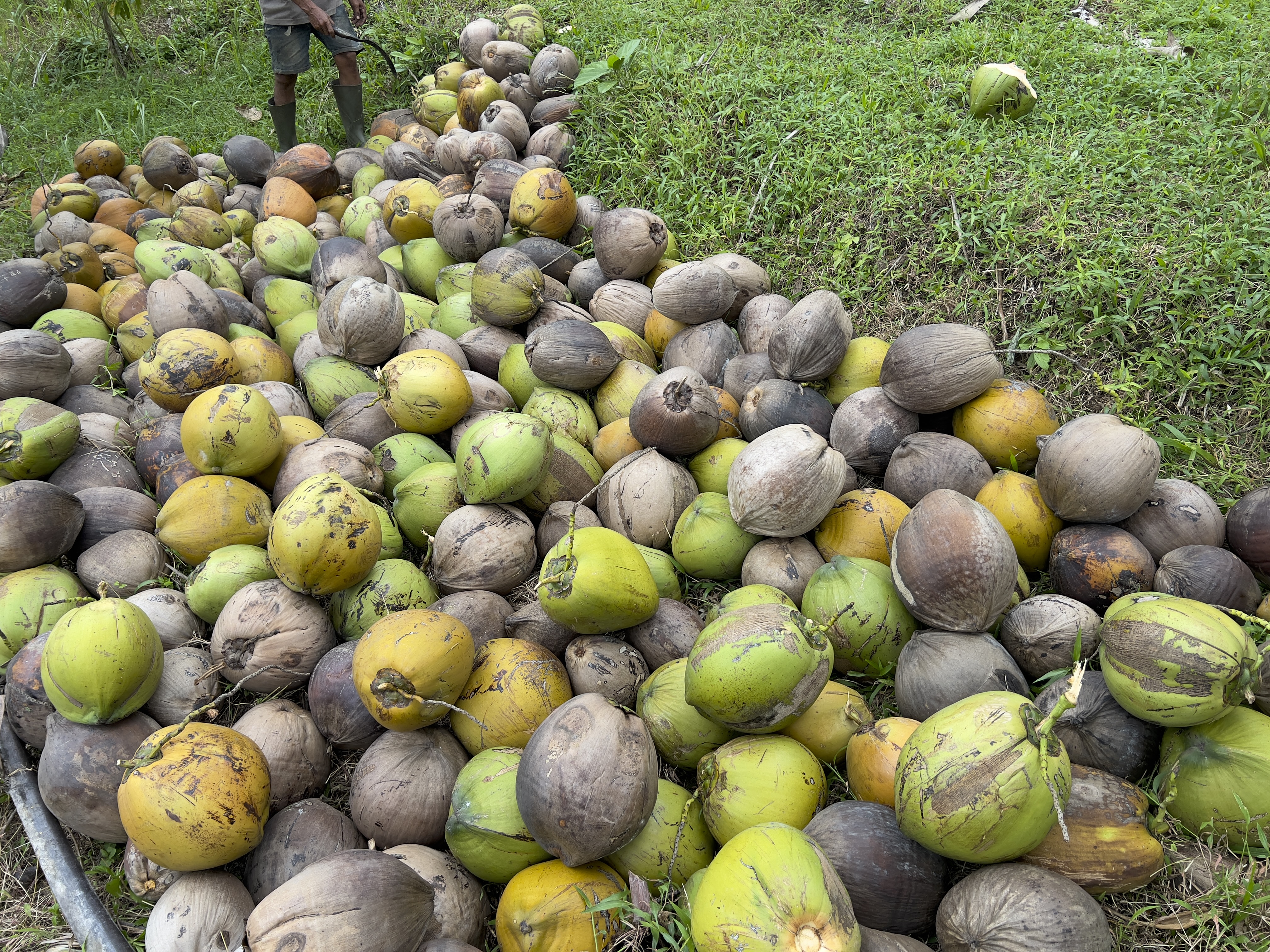 From colonial commodity to capital opportunity
The coconut palm has supported coastal economies across the tropical world for centuries, yet the modern coconut industry as we know it is relatively young. Its structure has been shaped not only by agriculture, but by geopolitics, industrialisation, nutrition science, and shifting global consumer tastes, and understanding that history offers useful context for the challenges and opportunities the sector faces today.
For centuries before industrialisation, the coconut palm was the foundation of daily life across South and Southeast Asia, the Pacific, East Africa, and parts of Latin America, providing food, oil, fibre, and timber to largely local and regional economies. That began to change in the 19th and early 20th centuries, as industrialising Europe and North America created growing demand for vegetable oils in soap, candles, and lubricants. Coconut oil and copra became valuable "hard oils" in this expanding industrial economy, pulling the crop into global trade for the first time. Colonial trade systems accelerated this shift further, building large copra export industries in the Philippines, the Dutch East Indies, South Asia, and the Pacific, production that leaned heavily on smallholder farmers linked into export networks.
That smallholder dominance remains a defining feature of the industry today: roughly 80% of global coconut production still comes from smallholder farms across Indonesia, the Philippines, and India, the world's three largest producers (Sustainable Coconut Partnership). For anyone evaluating the sector as an investment, this matters directly, capital has to work through millions of individual farming households rather than a small number of corporate plantations.
The Second World War disrupted this system considerably. As fighting spread across the Philippines and the Pacific, coconut oil supply to the United States was effectively cut off, pushing wartime industries toward corn, soy, and sunflower oil as substitutes, a shift that would outlast the war itself. In the decades that followed, soybean, sunflower, rapeseed, and palm oil expanded rapidly on the back of new processing technology, and coconut oil settled into being just one of many competing oils rather than a central player. Its reputation took a further hit in the 1970s through the 1990s, when public health guidance in many countries turned against saturated fats, a shift that shaped Western perceptions of coconut oil even as it remained vital to producing countries' diets and economies.
Coconut's fortunes turned again in the early 2000s, as plant-based eating, natural ingredients, and coconut water's rise as a global beverage category brought the crop back into view, aided by renewed scientific interest in medium-chain triglycerides (MCTs), a type of fat metabolised differently than most others, and popular in wellness and sports-nutrition products. By the mid-2020s, MCTs had grown into a meaningful market of their own, spanning specialty ingredients to a broader ecosystem of consumer wellness products.
But this resurgence in demand ran into a quieter problem: much of the world's coconut infrastructure hadn't kept pace. Palms take five to eight years to reach meaningful production, and replanting across the major producing countries has consistently lagged behind what's needed to keep pace with ageing plantations. Aging trees, lagging replanting programs, and aging farmer populations meant the sector's real constraint was no longer market appetite, but agricultural capacity itself.
This points to a multi-year supply gap: global demand for coconut-derived products is growing faster than the biological replanting cycle can supply it, meaning capital deployed toward replanting and processing capacity now may capture disproportionate upside before supply catches up.
That tension defines where the industry stands today. Governments, agribusiness groups, and investors are now exploring ways to revitalise coconut production, through policy, replanting, better genetics, integrated processing, and more regenerative farming systems. Of these levers, replanting and improved genetics are the most capital-intensive but also the slowest to return, tied to a coconut palm's multi-year maturation cycle, while processing infrastructure and value-added product lines offer comparatively faster paths to return. Initiatives such as the Sustainable Coconut Partnership, alongside government-led replanting programs in Indonesia and the Philippines, signal where institutional attention is already concentrated.
This is also the gap the CKC Platform was built to close: an independent not-for-profit that works across policy, supply chain models, farmer engagement, and full-palm value, aiming to connect global capital with the right people and resources in the sector rather than operating investment vehicles itself. Haigan Murray has separately developed the Coconut Multiverse Series, a personal body of work laying out this framework in more depth, from product streams to fund architecture, for readers who want to go further.
Every part of this opportunity carries real risk. Ageing palms can't be replaced overnight, given that five-to-eight-year runway to production. Climate exposure, typhoons in the Philippines and Pacific, drought tied to El Niño, adds further uncertainty, as does a supply chain built on millions of smallholders rather than a handful of estates. And coconut simply moves on a longer clock than most capital is built for.
CKC's view is that none of this is really about demand. It's structural: ageing palms, fragmented farms, thin seed systems, a shortage of patient capital. That's the gap CKC exists to close, not as an investor itself, but as a neutral platform helping capital find its way to where the sector needs it most. The real story isn't that people need convincing to buy coconut products. It's whether the supply side can catch up to demand that already exists, and the window to shape that may be narrower than it looks.
CKC INSIGHT Editorial
The editorial and media arm of the CKC Platform, covering the coconut sector.
Latest Stories
Discussions
No comments yet. Be the first to start the conversation!
Leave a Comment